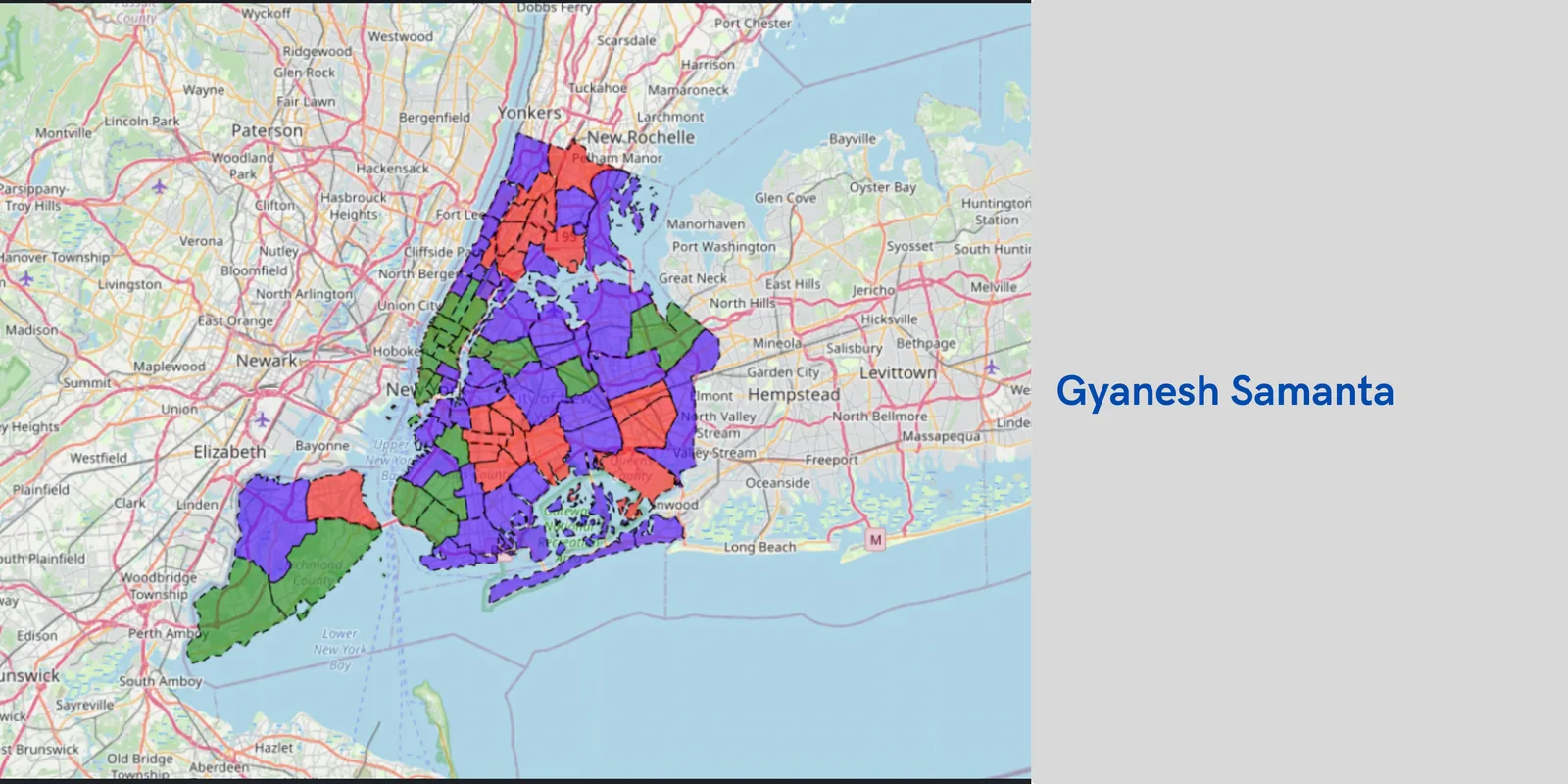
NYSee the Shootings
New York City – a metropolis celebrated for its diversity, resilience, and endless opportunities. Yet, beneath the bright lights of Times Square and the tranquillity of Central Park, there's a narrative that casts a shadow over the…
New York City – a metropolis celebrated for its diversity, resilience, and endless opportunities. Yet, beneath the bright lights of Times Square and the tranquillity of Central Park, there's a narrative that casts a shadow over the city's illustrious image: gun violence. Utilizing data from NYC Open Data, we delve deep into the patterns, demographics, and larger societal implications of shootings in this iconic city.
1. Geographical Disparities: Shootings Across Boroughs
The city of New York is divided into five boroughs, each with its distinct identity, socio-economic dynamics, and challenges. One of these challenges, unfortunately, is gun violence.
Brooklyn, with its rich history and cultural significance, emerges as the epicentre of this issue, accounting for over 10,000 shooting incidents. The Bronx, another borough with a complex socio-political fabric, follows with 8,000. As we move to Queens, Manhattan, and Staten Island, the numbers reduce, but the problem persists.
Understanding why certain boroughs are more affected than others requires an intricate examination of socioeconomic factors, educational opportunities, unemployment rates, and more. Each shooting statistic is not just a number but a reflection of underlying systemic issues that require urgent attention.
2. Time's Relentless March: Evolution of Shootings Over the Years
Time has always been a witness to the changing landscapes of societies, and New York City is no exception. The city's relationship with gun violence has seen its ebbs and flows. Starting in 2013, we saw an alarming average of 70 shootings, which might have set the city on a path of introspection and action.
The subsequent decline from 2016-2020 offers a glimmer of hope. It signifies the effectiveness of community programs, policing strategies, and perhaps even changes in societal attitudes. Yet, as history has often shown, progress isn't always linear. The surge in 2021, with incidents skyrocketing to around 200, signals that the fight against gun violence is far from over.
3. The Age Factor: Youth at the Crossroads
The age demographics behind the triggers pull us into a realm of introspection. The 18-24 age bracket, often seen as the years of exploration, education, and embarking on new journeys, tops the list with over 6,000 incidents. Close on its heels is the 25-44 age group. The question we must ask is, why is the youth so deeply entrenched in this crisis?
Numerous factors come into play: peer pressure, lack of educational or job opportunities, societal expectations, and even the allure of gang culture. The revelation that minors under 18 are involved in around 1,500 shootings is a clarion call for early intervention, mentorship programs, and community support.
4. Beyond the Trigger: Consequences and Outcomes
Every bullet fired has consequences. While the immediate aftermath is evident, the ripple effects on families, communities, and the very fabric of society are profound. Our data indicates that 19.3% of these incidents result in fatalities. The remaining 80.7%, though not fatal, leave scars both physical and psychological.
The trauma of gun violence extends beyond the immediate victim. Families are torn apart, communities live in fear, and children grow up in environments where the sound of gunshots becomes tragically familiar.
5. Racial Dynamics: A Complex Web
Race, a construct deeply embedded in America's history, plays a significant role in our analysis. The data unveils a sombre reality: out of 12,275 murders, 9,059 are black-on-black incidents. This statistic isn't about pitting one race against another but understanding the deeper socio-economic and systemic challenges that particular communities face.
Addressing the root causes – be it unemployment, lack of education, systemic discrimination, or the remnants of historic prejudices – is paramount. The data is a mirror reflecting society's imperfections and is a call to action for all stakeholders.
6. Preface
All the Data mentioned here are borrowed from NYC Open Data, you can navigate to the same and download the dataset for yourself, the authenticity of the data is accounted for by the Govt. at NYC.
The code for the notebook will soon be available in my GitHub Repository. This project is submitted to Youth Data Hack along with my teammate Priyadarsh S S so, we'll be making the code publicly available after the hackathon ends.
Please do not include me in any racial slurs, targeted groups or worse, try and cancel me. I'm a mere reporter of the data that I received officially through legitimate sources.
There is more to the notebook than just these statistics, but I believe this gives us a good insight into the joy of data storytelling.
The map in the header of the article is a representation of the precincts of NYC and is coloured based on the number of shootings that took place in that area. Red -> more than 75 percentile
Blue -> Between 25-75 percentile
Green -> less than 25 percentile
Lastly, wish me and Priyadarsh S S luck in order to win the hackathon!
7. Hope?
While the numbers paint a bleak picture, New York City's spirit of resilience shines bright. Grassroots organizations, community leaders, policymakers, and everyday citizens hold the key to change.
From gun control laws to community outreach programs and mentorship initiatives to mental health support, the solutions are multifaceted. By understanding the data, recognizing the patterns, and most importantly, listening to the stories behind the statistics, NYC can chart a path towards a safer, more harmonious future.